
Master data is the foundation of every manufacturing ERP system. Accurate and consistent information helps businesses streamline operations, improve reporting, and make informed decisions. Infor LX (BPCS) is a comprehensive ERP system that supports manufacturing, supply chain, and financial processes, helping manufacturers manage critical business information across connected operations.
However, even the most capable Infor ERP LX BPCS environment can suffer from duplicate, outdated, or inaccurate records without proper data management practices.
Establishing strong governance, standardized processes, and regular data maintenance ensures that ERP LX software continues to deliver reliable business insights and operational efficiency.
By following proven best practices, organizations using Infor LX BPCS can maintain high-quality master data, reduce costly errors, support compliance, and improve the long-term performance and scalability of their ERP system.
What Is Master Data in Infor LX?
Master data refers to the essential business information that remains relatively stable and is shared across multiple ERP processes. Unlike transactional data, which changes with daily business activities, master data acts as the central reference for operations.
In Infor LX (BPCS), this includes customer and supplier records, inventory items, bills of materials (BOM), routing details, warehouse locations, general ledger accounts, pricing structures, and tax information.
Depending on the organisation’s business processes and configuration, these data elements can support activities across manufacturing, supply chain management, procurement, warehousing, sales, and financial operations. Infor LX itself provides functionality across manufacturing, supply chain, and financial processes, making consistent master data important for maintaining connected workflows.
These records support manufacturing, procurement, finance, warehousing, and sales, making accuracy and consistency critical for efficient business operations.
What Are Common Challenges That Affect Master Data Quality?
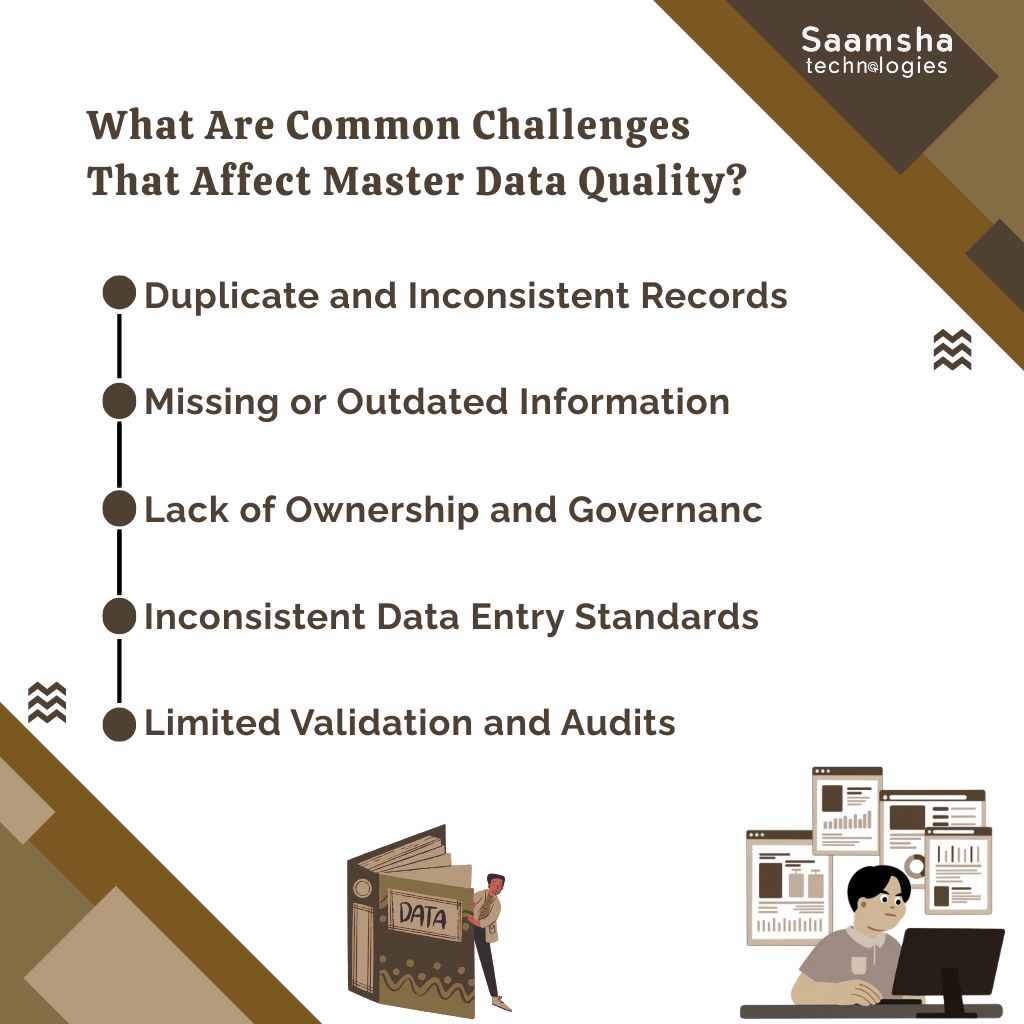
Master data quality issues often develop gradually as ERP environments grow. The following challenges commonly affect data accuracy, operational efficiency, and reporting in Infor LX (BPCS):
- Duplicate and Inconsistent Records: Multiple customer, supplier, or inventory records created with different naming conventions, item codes, or abbreviations lead to reporting errors, purchasing issues, and inefficient operations.
- Missing or Outdated Information: Incomplete product details, obsolete supplier records, incorrect pricing, and outdated customer information disrupt procurement, production planning, inventory management, and order fulfillment.
- Lack of Ownership and Governance: Without assigned data owners, approval workflows, and standard data management policies, records become inconsistent, reducing accountability and increasing the risk of errors across the ERP system.
- Inconsistent Data Entry Standards: Different departments following different formats for units of measure, addresses, or product descriptions make data difficult to search, analyze, and integrate.
- Limited Validation and Audits: Without regular data reviews and validation checks, inaccurate, incomplete, or obsolete records may remain in the system for extended periods. Establishing recurring validation and audit processes helps organisations identify these records and maintain dependable master data over time.
What Are the Best Practices for Maintaining Master Data Quality in Infor LX?
Maintaining high-quality master data requires consistent processes, clear accountability, and regular monitoring. The following best practices help organizations improve data accuracy and maximize the long-term value of Infor LX (BPCS):
● Establish Clear Data Governance and Ownership
Assign dedicated owners for customer, supplier, inventory, product, and financial master data. Define responsibilities for creating, reviewing, approving, and updating records. A structured governance framework improves accountability, maintains consistency across departments, and ensures changes follow approved business policies.
● Standardize Data Entry Rules and Naming Conventions
Create standard formats for item codes, customer names, addresses, units of measure, and product descriptions. Consistent naming conventions reduce duplicate records, improve search accuracy, simplify reporting, and help different departments use the same data standards throughout the ERP environment.
● Validate Data Before It Enters the System
Use mandatory fields, format validation, approved value lists, and duplicate checks during data entry. Preventing incorrect information from entering Infor LX (BPCS) reduces manual corrections, improves data reliability, and minimizes downstream operational errors.
● Prevent Duplicate Record Creation
Require users to search existing records before creating new ones. Apply approval checks and duplicate detection tools to avoid repeated customer, supplier, and inventory records that can affect reporting and operational efficiency.
● Perform Regular Data Audits and Cleanup
Schedule routine audits to identify inactive, incomplete, duplicate, or obsolete records. Archive unused data where appropriate while retaining historical information required for reporting, compliance, and business analysis.
● Control User Access and Approval Workflows
Implement role-based permissions so only authorized users can create, modify, or approve master data. Approval workflows improve accountability, reduce accidental changes, and help maintain consistent data quality standards.
● Train Employees on Master Data Standards
Provide regular training on data entry procedures, governance policies, approval processes, and common errors. Well-trained employees are more likely to maintain accurate records and support consistent master data quality across the organization.
Organisations looking to strengthen their Infor LX environment can also work with experienced specialists for implementation, customization, governance, upgrades, application support, and business process optimisation. Saamsha Technologies provides Infor LX expertise to help businesses align their ERP environment with their operational requirements.
How Automation Improves Master Data Quality?
Automation strengthens master data quality by reducing manual effort and ensuring consistent data management across Infor LX (BPCS). It helps organizations improve accuracy, minimize errors, and maintain reliable ERP information.
● Automating Validation, Audits, and Exception Reporting
Automation validates mandatory fields, detects duplicate records, identifies missing information, and generates exception reports. Scheduled audits also flag inactive or obsolete records, enabling faster corrections and helping maintain consistent, accurate master data across ERP modules.
● Automated Data Management
Automated data management improves data consistency, reduces manual errors, speeds up routine maintenance, and supports reliable reporting. It also enhances compliance, frees employees from repetitive tasks, and ensures Infor LX (BPCS) delivers accurate information for better planning, decision-making, and long-term operational efficiency.
Final Words
Maintaining high-quality master data is an ongoing process that requires continuous attention rather than a one-time effort.
Organizations should establish strong governance, validate data before it enters the system, conduct regular audits, leverage automation, and train employees to adhere to consistent data standards.
These practices help reduce errors, improve reporting accuracy, and support efficient manufacturing, supply chain, and financial operations.
By investing in effective master data management, businesses can maximize the value of Infor LX (BPCS), strengthen the performance of Infor ERP LX BPCS, and ensure ERP LX software continues to deliver reliable insights and streamlined workflows.
Need expert Infor LX support? Connect with Saamsha Technologies for implementation, upgrades, application support, and business process optimization tailored to your manufacturing operations.