Microsoft Azure, also known as Azure, is a leading Microsoft Cloud platform launched by Microsoft in 2010. It simplifies the task of organizations when it comes to building, deploying, and managing applications.
Azure offers a wide range of services, including computing, storage, networking, analytics, and Azure Artificial Intelligence solutions. By leveraging Azure, businesses don’t need to own and maintain physical data centers.
According to a report from Synergy Research Group, Azure’s market share in the cloud infrastructure market is 21%, just behind AWS. So, you can understand how widespread its popularity is across enterprises worldwide.
This blog will provide a clear understanding of Microsoft Azure, its features and benefits, service categories, and how Cloud Computing as a Service works for modern businesses.
How Does Microsoft Azure Cloud Work?
Azure works through a global network of Microsoft-managed data centers that deliver Cloud Computing as a Service over the internet.
- Global Data Centers
Azure operates through a worldwide network of data centers that ensure high availability, faster performance, and reliable cloud services across different regions.
- Azure Portal Access
Users can access and manage Azure services through the Azure portal, a web-based platform that helps monitor resources, configure settings, and control cloud operations efficiently.
- Application Hosting
Azure supports the secure hosting of applications, websites, workloads, and enterprise data, while also enabling Azure Artificial Intelligence and advanced cloud automation capabilities.
- Third-Party Integration
Azure integrates with various third-party tools, software platforms, and cloud services, allowing businesses to improve workflows and enhance operational flexibility.
Features of Microsoft Azure Cloud
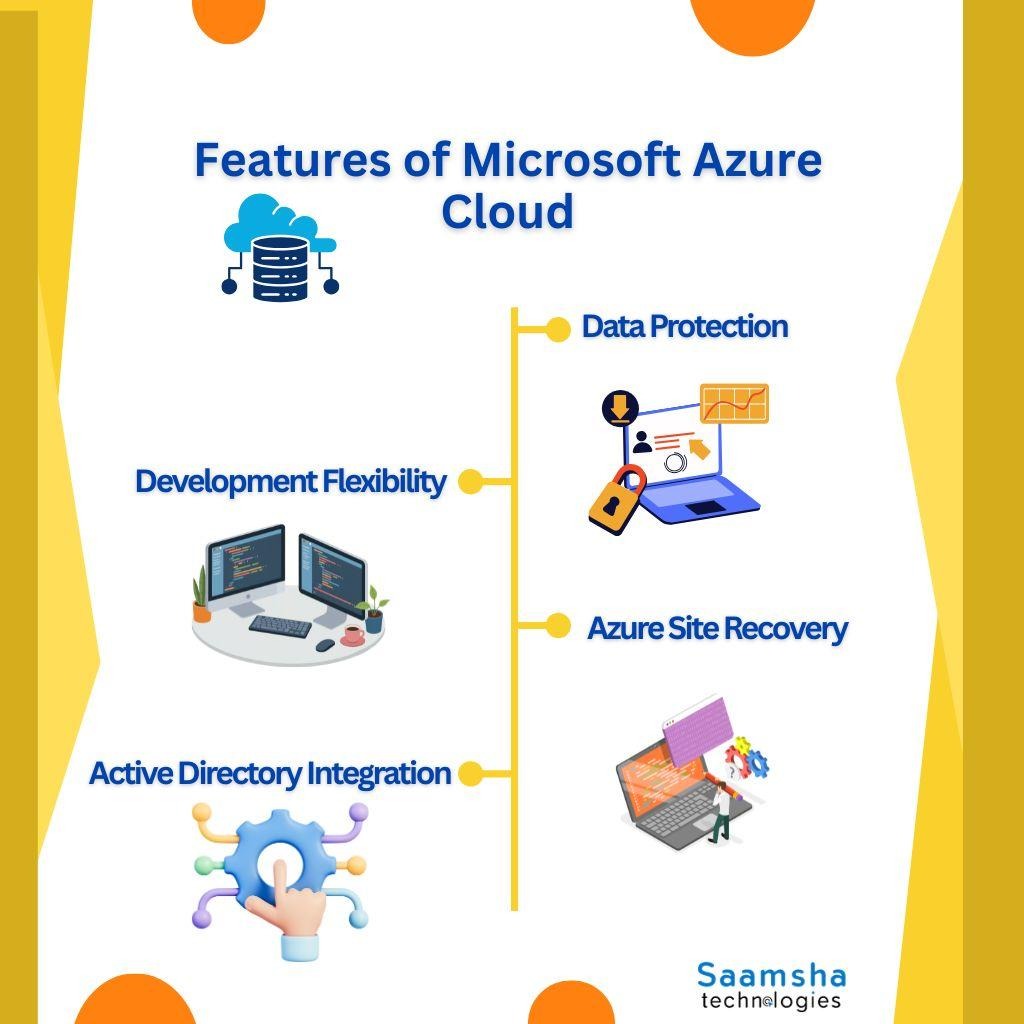
The Microsoft Cloud platform offers features such as data protection, site recovery, flexible development, and advanced security capabilities. Let’s have a detailed look:
- Data Protection: Azure uses various methods, such as replication, snapshots, and encryption, to secure your data. It facilitates data encryption across multiple regions by storing data in various data centers worldwide.
- Development Flexibility: With Azure, you can build, deploy, and manage applications that run on any device at any point in time. Users also have the option to choose their preferred coding languages and frameworks.
- Azure Site Recovery: With this feature, you gain full control over data replication methods. You can define the details and also the metrics to monitor. Customizing the replication schedule as per the business needs is feasible in this regard.
- Active Directory Integration: Azure Active Directory (AAD) links user profiles with applications, thereby enhancing security. This also enables seamless sign-in experiences.
At Saamsha Technologies, we help businesses adopt secure, scalable Azure solutions to streamline cloud adoption, improve operational efficiency, and accelerate digital transformation.
Why Do Organizations Choose Microsoft Azure?
Do you know why organizations prefer Microsoft Azure? The Microsoft Cloud ecosystem has grown in popularity and become the preferred choice for startups, enterprises, and Fortune 500 companies. It supports a wide range of programming languages, frameworks, operating systems, and databases.
- Unparalleled Scalability and Flexibility: Azure is highly scalable, which sets it apart. It comes in handy for both startups and established enterprises when vast resources are needed, especially during peak seasons. Also, they can slow down when the period is slower.
- Enhanced Security: Security has been a concern for every business. This is another area where Microsoft Azure excels. Azure Security Center offers integrated threat protection, unified security management, and support for Azure Artificial Intelligence-driven threat detection.
Apart from these, there are features such as Advanced Threat Protection (ATP), multi-factor authentication, and role-based access control.
- Cost-Effective: It’s a general notion that cloud platforms are costly, but not always. Azure gives you multiple options for cost optimization.
With Azure, you have to make a payment based on resource consumption thresholds. Most organizations prefer this “pay-as-you-go” resource model for obvious reasons.
What are the Service Categories Provided by Microsoft Azure?
Azure Cloud offers the following three service categories:
- Infrastructure as a Service (IaaS)
Under this category, virtual machines, networking, and storage will come. However, it’s up to the users to manually build and deploy the applications. Azure supports a wide variety of operating systems.
- Platform as a Service (PaaS)
PaaS includes all IaaS features, along with development tools, operating systems, business analytics, and Cloud Computing-as-a-Service capabilities for developers. This way, PaaS helps developers to do their best work. This cloud-based platform makes collaboration easy and helps your business expand without growing your team.
- Software as a Service (SaaS)
By choosing SaaS, businesses get hosted applications that the service provider manages and upgrades. It is a broad category and includes the features of both IaaS and PaaS. Here, your business rents the software as needed and pays only for what you use.
What are Some of the Common Use Cases of Microsoft Azure Cloud?
Let’s explore some of the use cases of Microsoft Azure:
- Business Application Hosting: Several organizations leverage Azure to host their business applications. This can be customer relationship management (CRM), enterprise resource planning (ERP), or other line-of-business applications.
- Hosting Databases: Azure provides cloud-hosted relational and non-relational databases, such as Azure SQL and NoSQL. These databases are optimized for better performance and global access.
- Data Analytics and Business Intelligence: Azure offers a range of services for data analytics and business intelligence. This includes Azure Synapse Analytics, Azure Databricks, Azure Data Lake, and Power BI. Organizations rely on Azure for real-time analytics, data warehousing, and predictive analytics.
- Data Storage and Databases: You can also store data in the Azure Cloud. Use services like Blob Storage for fragmented data, Table Storage for NoSQL data, and Azure SQL Database for relational databases.
Final Thoughts
As you can see, Microsoft Azure is a powerful Microsoft Cloud platform designed to support businesses across different industries and markets. Organizations looking to expand, innovate, improve efficiency, and compete in the global marketplace can gain significant value from Azure.
Whether you are building cloud-native applications, migrating legacy systems, or improving existing IT infrastructure, Azure provides a wide range of tools and services to support your business goals. Its scalability, security, flexibility, and Cloud Computing as a Service model make it a strong choice for modern enterprises.
Azure also helps businesses manage changing workloads, improve collaboration, and adopt emerging technologies without making large investments in physical infrastructure.
As cloud adoption continues to increase worldwide, Microsoft Azure is expected to play an even more important role in shaping the future of business technology and digital transformation.